
Singaporean and Malaysian Recipes
If you’re looking for authentic Singaporean and Malaysian recipes, you’re in the right place. This page brings together the dishes, flavours and food traditions that make Singaporean and Malaysian cooking so loved – from rice and noodle dishes to curries, rotis, drinks, kuih and festive favourites. Whether you’re after everyday Singaporean recipes, classic Malaysian recipes, or the sort of dishes that taste like home, this is where you’ll find them.
And we shan’t be forgetting festive recipes either. Whether it’s Christmas, Eid, Chinese New Year or Diwali, you’ll find those here too. If there’s a Singaporean or Malaysian recipe you’re desperately missing, send me an email and I’ll get right on the case. It may take me a few weeks sometimes, but ask my readers over at LinsFood – I always deliver!
What is the Local Cuisine?
Ever wondered what Singaporean food and Malaysian food is like? Why are there so many different types of Singaporean and Malaysian cuisines? Read on, to find out more and enjoy many recipes from these countries, both well known and a little obscure.
Singaporean and Malaysian recipes share many similarities, alongside plenty of regional and cultural differences, because the two countries have long and closely connected histories. Singapore joined Malaya, Sabah and Sarawak to form Malaysia in 1963, before separating in 1965 following a brief union marked by political, economic and communal tensions. Their culinary connections stretch back much further, however, shaped by centuries of trade, migration and movement across the wider Malay world.
The racial mix is similar in that you have the Malays, the Chinese, the Indians and a few other small ethnic groups. What is different, is the percentage per race. Malaysia is predominantly Malay, with the Chinese, Indians, Eurasians and Nyonyas making up a small part of the general population. Singapore, on the other hand, is predominantly Chinese, although Singapore’s indigenous race is actually the Malays.
Their fantastic racial mix is brilliantly reflected in the various local cuisines. To talk of local food of Singapore and Malaysia is to talk of Malay, Chinese, Indian (north and south), Eurasian and Nyonya foods. On a side note, Christmas, Eid, Chinese New Year and Diwali are all public holidays in Singapore, reflecting its multi racial make up.
Malays in Singapore and Malaysia
The Malays are central to the history of both Singapore and Malaysia, and their story runs right through the early foundations of the wider Malay world.
In Singapore, they are recognised in the Constitution as the indigenous people of the island, while in Malaysia, Malay history is inseparable from the story of the peninsula itself, from old sultanates and trading ports to the shaping of modern national identity. In the Malay Annals, Sang Nila Utama, a prince linked to Palembang, is said to have founded Singapura around 1299 after arriving on Temasek. The name itself comes from Sanskrit: simha meaning lion and pura meaning city. So yes, Singapore really is the Lion City, and not just because it sounds good on a tote bag.
And because history in this part of the world is never content with being merely tidy, the old royal genealogies in the Malay Annals even stretch back to Alexander the Great, known in the text as Iskandar Zulkarnain. Whether you read that as legend, symbolism or a particularly ambitious bit of royal storytelling, it does tell you something important: Malay history across Singapore and Malaysia has always been rich, layered and far bigger than the simplified versions we are often handed.
Today, Malay communities in both countries include people whose family roots stretch across the wider Malay Archipelago, including Javanese, Bugis, Baweanese and other communities that have helped shape local culture over generations. So while the word “Malay” can sound neat and singular on paper, in real life it has always been more textured than that, which, frankly, is true of most things worth eating and talking about.
When it comes to food, Malay cuisine sits right at the heart of Singaporean and Malaysian cooking. This is the world of rempah, that glorious pounded spice paste built from ingredients like chillies, shallots, ginger and garlic, often joined by belacan, santan, tamarind, galangal and lemongrass.
It is a cuisine that can be rich, sharp, spicy, earthy and fragrant all at once, and it has given both countries some of their most iconic dishes, from nasi lemak and rendang to satay, sambal and all manner of coconut-laced curries and gravies. In other words, if you enjoy Singaporean Malay food or Malaysian Malay recipes, you are already eating from one of the great flavour foundations of Southeast Asia.
Chinese in Singapore and Malaysia
Chinese communities were already part of the wider Malay world long before modern Singapore took shape, but large-scale migration really gathered pace in the 19th century under British rule. In Singapore, many of those early arrivals came from southern China and formed the five major dialect groups we still talk about today: Hokkien, Teochew, Cantonese, Hakka and Hainanese. In Malaysia too, Chinese communities put down deep roots, especially across Peninsular Malaysia, where Hokkien, Cantonese, Hakka, Teochew and Hainanese traditions became especially prominent.
When I was growing up, Hokkien was everywhere in Singapore, with Cantonese not far behind. I remember being fairly fluent in Hokkien myself, but more than twenty years of barely speaking it has, rather rudely, taken the shine off that. Languages do not reward neglect, apparently. In Malaysia, the picture is just as rich, though it shifts a little by region, which is exactly what you would expect in a place shaped by migration, trade and people settling where work and opportunity took them.
And of course, all of this matters enormously when it comes to food. Chinese food in Singapore and Malaysia is not one neat little category, but a whole spread of dialect-based cooking traditions that adapted over time to local ingredients, local tastes and local realities. That is why the Chinese side of Singaporean and Malaysian food can mean anything from Teochew steamed dishes and Cantonese stir-fries to Hakka stuffed tofu, Hokkien noodles and Hainanese cooking with its famously outsized influence on kopitiam culture.
Probably the most famous example is Hainanese chicken rice, which may trace its roots back to Hainan, but became something distinctly its own in Singapore and Malaysia. And that, really, is the story of so much Chinese food in this part of the world: brought over, adapted brilliantly, and now so woven into everyday eating that it feels impossible to imagine the table without it. Over the years, the rise of halal Chinese eateries has only made that table bigger, which is culinary democracy at its best.
Indians, Pakistanis and Sri Lankans
Indian, Pakistani and Sri Lankan communities have long been part of the story of both Singapore and Malaysia, but large-scale migration really picked up in the 19th century under British rule, especially after Singapore was established as a trading port in 1819.
Many migrants came from South India, particularly Tamil-speaking communities, but they also arrived from Bengal, Gujarat and Punjab, as well as from Ceylon, now Sri Lanka. So while people often speak of the “Indian” community as though it were one neat block, it never really was. It was, and still is, a wonderfully mixed gathering of languages, regions, religions and food traditions.
That strong South Indian presence is one reason Tamil became one of Singapore’s four official languages. In Malaysia, Tamil is not an official language in the same constitutional sense, but it remains an important community language with a long and visible presence, especially through Tamil education and cultural life. In other words, the Tamil imprint on both countries is unmistakable, even if the legal wording is not the same.
When it comes to food, that South Indian influence is everywhere in Singapore and Malaysia, which would explain my vast knowledge of and enthusiasm for South Indian food. Thosai breakfasts with friends were one of my great joys in my early twenties, and frankly, still sound like an excellent life choice.
This is the world of dosa and thosai, idli, vadai and putu mayam, alongside fish curries, dhal, chutneys and all manner of wonderfully sharp, spicy, coconutty things. But that is only part of the story. The Indian Muslim and wider North Indian influence is just as important, especially once you get to biryani, murtabak, roti prata or roti canai, kheer and haleem. So yes, South Indian food may be one of the strongest foundations, but the table itself is much bigger and far more interesting than that.
And if you narrow it down, my own family’s base ethnicity is Pakistani, which just goes to show yet again that in this part of the world, the lines between culture, food and family are rarely tidy and usually much more delicious because of it.
Eurasians in Singapore and Malaysia
The term Eurasian was initially coined for Anglo Indians in the time of the British Raj in India, but now encompasses all manner of Caucasian heritage. Today, the term Eurasian includes so many hybrids that it boggles the mind.
“Eurasian” sounds simple enough at first glance: European and Asian. Easy. Straightforward. No drama. And then, as ever, history arrives and complicates things beautifully.
In Singapore and Malaysia, Eurasian food is not just about ancestry in the broadest sense, but about a distinct community and cuisine shaped by centuries of migration, intermarriage, colonisation, adaptation and, perhaps most importantly, cooking. While Eurasian identity can encompass a range of European heritage, the strongest culinary influence in the region is undoubtedly Portuguese.
A great deal of that story begins in Malacca, which the Portuguese captured in 1511. The Dutch took over in 1641, and the British later established themselves across the region too, but the Portuguese influence did not simply disappear with the next colonial handover. It stayed behind in language, customs and, very conveniently for all of us, in the food.
Who would’ve thought that a bunch of fisherman with a few handy boats could have had such a profound influence that would survive the fickle ravishes of Time and still be a marked presence, four to five centuries later?
One of the clearest legacies of that history is Kristang, the Portuguese-based creole associated with the Portuguese Eurasian community of Malacca, shaped over time by Malay and other local influences. So when Eurasian dish names sound faintly Portuguese while the flavours feel unmistakably Southeast Asian, that is not coincidence. That is history, still very much alive and showing off a bit.
And the food does exactly what you would expect from a community formed at the crossroads of so many worlds. It is layered, practical, bold and gloriously mixed. You find stews, braises and baked dishes alongside chillies, ginger, lemongrass, vinegar, mustard, soy sauce and even Worcestershire sauce.
There are recipes with obvious Portuguese roots, such as Devil Curry and Feng, but the wider Eurasian table in Singapore and Malaysia also carries Dutch and British traces. We have Mulligatawny and Kedgeree, and our local potato patties, called Bergedil (Perkedil in Indonesian). This is not a tidy, one-note cuisine. It is a proper hybrid, full of character, and all the better for it.
That is what makes Eurasian food in Singapore and Malaysia so compelling. It tells a bigger story – of ports and trade, empire and movement, family and survival, and generations of home cooks turning all of that history into dishes worth keeping, sharing and remembering.
Peranakans (Nyonyas/Babas) in Singapore and Malaysia
The term Peranakan is a broad one in Singapore and Malaysia, covering several locally rooted mixed communities. But for many of us who grew up here, it most commonly refers to the Baba-Nyonya community: Peranakans of Chinese descent whose culture took shape over generations in the Malay world, especially in Malacca, Penang and Singapore. Baba refers to the men, Nyonya to the women, and together they belong to a community that is ethnically Chinese but culturally far more layered than that neat little label suggests.
Over time, through intermarriage, adaptation and simply living side by side with local communities, Peranakan culture absorbed strong Malay influences into its language, dress, customs and, crucially for our purposes, its food. That is why Peranakan culture can feel Chinese, Malay and entirely its own all at once. Even within the community, there are regional differences too: Malacca and Singapore Peranakans are often associated with Baba Malay, while Penang Peranakans historically leaned more towards Penang Hokkien. The term Straits Chinese is also often used for Peranakans linked to the old Straits Settlements of Malacca, Penang and Singapore.
And then there is the food, which is where this glorious cultural mixing really gets to show off. Nyonya cuisine brings together Chinese ingredients and techniques with Malay aromatics, spices and local ingredients, and the result is one of the most distinctive food traditions in Singapore and Malaysia. It is rich, fragrant, layered and deeply persuasive, with the sort of flavours that make you stop mid-mouthful just to pay proper attention. Official heritage descriptions of Peranakan cuisine in Singapore describe it as a hybrid shaped by Chinese, Malay, Indian, Thai and Western colonial influences, which sounds about right for a cuisine that never believed in being dull for even a second.
This is the world of ayam buah keluak, with its dark, earthy nuts and deeply savoury gravy; babi pongteh, that comforting braise of pork and fermented soybean paste; chap chye, the beloved mixed vegetable stew; hae bee hiam with its punchy dried prawn heat; and laksa in its various forms, where noodles, coconut and spice all get very comfortable with one another. Then come the kuih, because Peranakans do not stop at savoury brilliance when they can also give you colourful, coconut-rich, gula melaka-laced sweets to finish the job properly.
So yes, Nyonya food really is an amalgamation of cultures, but that makes it sound far more polite than it actually tastes. This is a cuisine with backbone, perfume, depth and swagger, and one that can make a believer out of you from the very first mouthful.
Arabs in Singapore and Malaysia
Arabs may have been small in number in Singapore and Malaysia, but they punched well above their weight. Many of the early Arab settlers were Hadhramis from southern Yemen, and in 19th-century Singapore especially, families such as the Aljunieds, Alkaffs and Alsagoffs became enormously influential as traders, shipowners, landowners and philanthropists.
Their imprint is still all over the place, quite literally, in names like Arab Street and Aljunied, and more broadly in the shaping of Muslim social, religious and commercial life in Malay.
And then, of course, there is the food. Arab communities helped keep Middle Eastern flavours firmly on the table, from rice dishes like mandi and kabsa to mezze, breads and sweets such as hummus, tabbouleh, baklava and ma’amoul.
In Singapore especially, Arab and Arab Peranakan food traditions also overlap with the wider Muslim food culture of the region, which is exactly how you end up with a table that feels gloriously connected rather than neatly boxed off.
And perhaps because I clearly took that influence rather personally, my flagship blog, LinsFood, has lots and lots and lots of MENA recipes – food that speaks to my soul.
MENA = Middle Eastern and North African.
Chetties (Indian Peranakans) in Singapore and Malaysia
The Chetties, more properly known as the Chetti Melaka or Chitty Melaka, are often described as the Indian Peranakans of Malaysia and Singapore. Their roots lie in Melaka, where Tamil traders settled during the Melaka Sultanate and, over generations, married local Malay and Chinese women. The result was not simply an Indian community transplanted into the Malay world, but a distinctly Peranakan one, with its own creole language, customs, dress and identity. They are predominantly Hindu, but culturally they reflect the same layered, beautifully mixed history that shaped so many communities in the Straits.
And then there is the food, which is where all that history gets especially interesting. Chetti cuisine has a South Indian base, but it is deeply shaped by Malay and Nyonya influences, so you find dishes built on wet spice pastes, coconut milk, lemongrass, galangal and turmeric rather than relying only on the dry spice blends many people instinctively associate with Indian cooking.
Traditional Chetti dishes include lauk pindang and ikan parang masak pindang, along with Chitty-style nasi lemak, nasi kembuli and various kueh and festive sweets. In other words, this is yet another glorious Straits cuisine that refuses to stay in one neat box, which is precisely why it is worth knowing about
Jews in Singapore and Malaysia
The Jewish communities of Singapore and Malaya were never large, but they were far more significant than their numbers might suggest. Most were Baghdadi or Sephardi Jews who arrived in the 19th century, often from Iraq via India, and settled especially in Singapore and Penang, where they became merchants, traders and part of the fabric of local life. In Singapore, their legacy is still visible in places like Maghain Aboth and Chesed-El synagogues, while in Penang the old Jewish cemetery stands as one of the clearest reminders that a Jewish community once put down roots there too.
When it comes to food, this was never a huge public strand of Singaporean or Malaysian cooking in the way that Malay, Chinese or Indian food was, but it absolutely existed around family tables and festive meals. Because many of these families had roots stretching through Iraq and India, their cooking carried those influences too, which is how you end up with dishes that feel Middle Eastern, Indian and wholly their own all at once.
One such dish is Chicken Chitarnee, an Indian-Jewish curry with that glorious sweet-sour edge that makes you go back for another spoonful even when you insist you are full. The dish is associated with Baghdadi Jewish communities in India, and it’s one I learnt in Singapore from a Jewish family, before later sharing my own recipe for it on LinsFood.
So while the Jewish community in Singapore and Malaysia may have been small, it still left behind the sort of story I find impossible to resist: one of migration, memory, community and food travelling beautifully across borders before landing, quite happily, on the plate.
Jawi Peranakans in Singapore and Malaysia
Historically, the Jawi Peranakans were a distinct Straits-born Muslim community in Singapore and Malaya, descended largely from Indian Muslim, especially Tamil Muslim, fathers and Malay mothers. They became Malay-speaking, locally rooted and highly influential, particularly in 19th-century Singapore and Penang, where they were active in trade, publishing and public life.
In fact, the Jawi Peranakan newspaper, first published in Singapore in 1876, is considered the first Malay-language newspaper in the region. These days, the term is far less familiar because many Jawi Peranakans gradually assimilated into the broader Malay community, but historically, they were very much their own group.
And now, finally, the recipes!


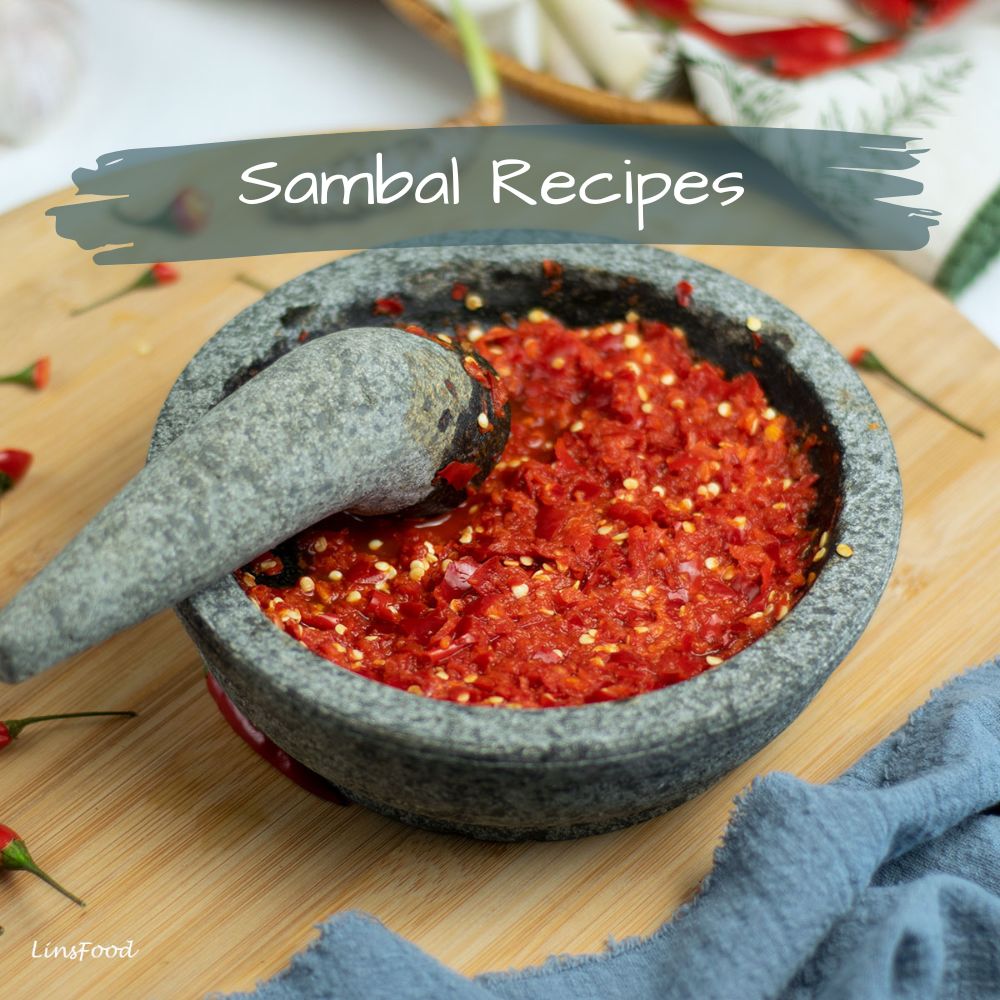


Also, in case you want to start a food business in Singapore, you need to understand the recipes and the taste of the locals. Not to mention cook like them!
Share this with Someone!